Document Type : scientific research paper
Authors
1
Associate Professor, Department of Private and Islamic Law, Faculty of Law and Political Science, University of Tehran, Tehran, Iran
2
Undergraduate Law Student, Faculty of Law and Political Science, University of Tehran, Tehran, Iran
Abstract
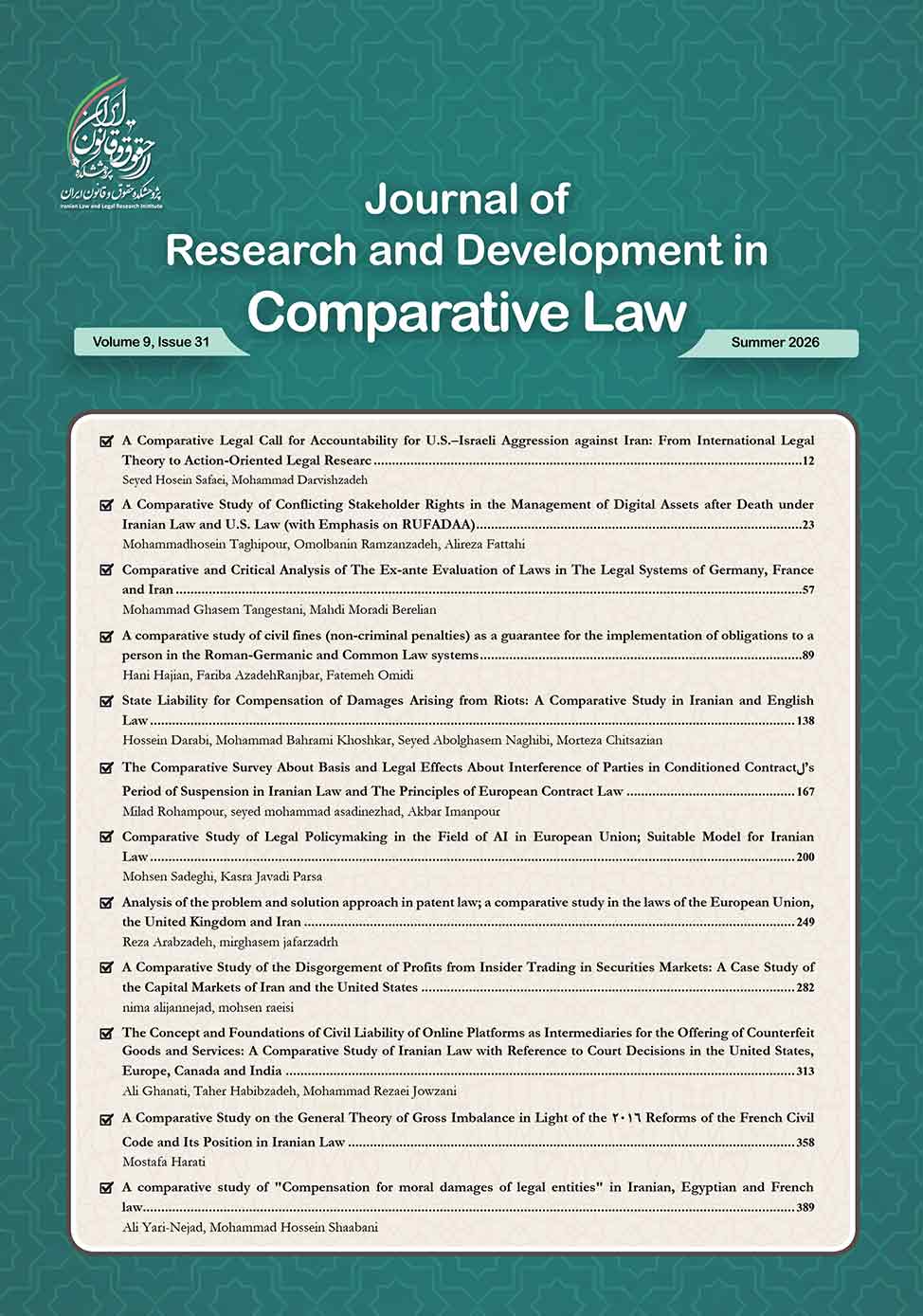
As AI technology expands, addressing its legal challenges has received significant attention, as AI, like any new technology, faces legal challenges alongside its technical benefits. This makes policymaking in the field of AI even more important because the legislature, judicial practice, and the policies of the executive agencies must follow a single policy so that we do not witness fragmentation or the establishment of conflicting and conflicting policies. Legal policy, in addition to the need to follow some general principles, must naturally be proportionate to the economic, cultural, political, and social conditions of each country, otherwise the negative consequences of this phenomenon will outweigh its benefits in the long run. In Iran, despite the existence of a national document on artificial intelligence, we are not witnessing coherent policymaking, and by utilizing a comparative study, it must be determined analytically and scientifically which policymaking model would be most suitable for Iran. Since this important issue has not been seriously examined in Iranian law, this article seeks to answer the question of whether the European Union's policymaking model can be suitable for Iran, although one should not neglect Iran's local and cultural requirements and specific economic conditions, such as sanctions. The following article is presented from a legal perspective and in two parts: In the first part, the concept of artificial intelligence and artificial intelligence policymaking models are explained with reference to the principles of the subject in the European Union, and in the second part, an appropriate model for Iranian law is proposed and analyzed. Finally, specific and practical solutions are presented to groups benefiting from the research results, including legislators. The reason for choosing the European Union for the comparative study is that, according to the hypothesis of the article, the European Union model is more suitable for Iran than expansionist models such as the American model, although we should not neglect the local and cultural requirements and specific economic conditions of Iran, such as sanctions.
Keywords
Subjects