Editor-in-Chief Lecture
Authors
1
Professor, Department of Private Law, University of Tehran, Tehran, Iran
2
Head of the Iranian Law and Legal Research Institute and former judge of the Supreme Court, Tehran, Iran.
Abstract
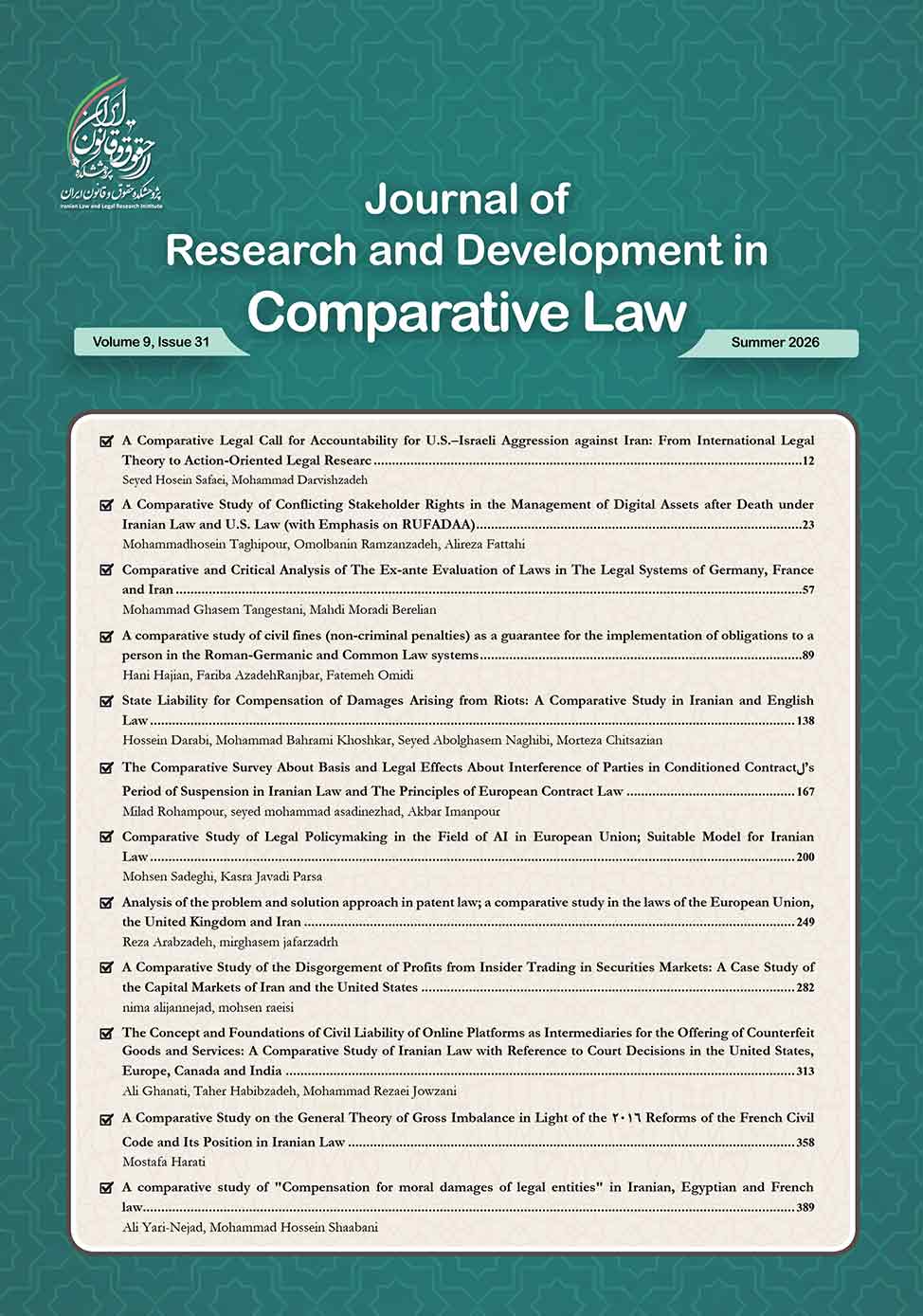
This research note calls for a comparative legal examination of the U.S.–Israeli aggression against Iran in 2026, focusing on alleged violations of the prohibition on the use of force, the principle of distinction, civilian protection, and the safeguarding of critical infrastructure. It contends that attacks on educational, medical, humanitarian, cultural, and essential-service facilities should not be treated as isolated events, but assessed as part of a broader pattern capable of engaging both State responsibility and the individual criminal responsibility of political and military leaders. In light of the limitations of existing international supervisory mechanisms, the note calls for moving beyond political narratives toward precise and methodologically rigorous legal analysis.The proposed agenda brings international law into conversation with Islamic legal principles, domestic legal systems - particularly that of the United States - and the practice of jurisdictions exercising universal jurisdiction. It identifies research pathways concerning aggression, war crimes, command responsibility, sovereign immunities, third-State obligations, collective punishment, reparations, and the legal consequences of attacks on children and civilian infrastructure. Its central aim is to transform national suffering into legally actionable arguments capable of supporting litigation, evidentiary documentation, reparative claims, and the pursuit of accountability before domestic, international, and transnational fora.